


Somewhere today, an employee is pushing through pain just to meet a deadline, and her boss might be calling it dedication.
Somewhere else, another worker is skipping her medical appointment because “the project can’t wait.”
And perhaps right now, a woman has noticed something unusual but tells herself she’ll get checked “when things slow down.” But do they? In the rush to perform, too many employees silence their own bodies, and too many workplaces reward them for it. We praise commitment, but we often confuse endurance with excellence.
And while organizations celebrate productivity metrics and growth targets, few pause to ask the simplest, most human question:
“Are our people okay?” “How are they doing on personal levels?”
When Dedication Turns Into Silent Suffering
Let’s be honest, how many bosses ask you how you’re really doing after the usual “Good morning”? How many of them would notice if something was off, if you looked pale, exhausted, or in pain? Workplaces have become grounds for silent suffering, where exhaustion is praised as commitment and pain is brushed aside as perseverance. Too often, employees show up battling headaches, stress, or even more serious symptoms but they keep going, afraid that taking a break will be seen as weakness. In the race for results, many organizations have forgotten that behind every report, target, or meeting, there’s a human being with limits, emotions, and a body that needs care. Because while companies talk about performance, innovation, and success, very few talk about wellness, balance, or the health of the people who make that success possible.
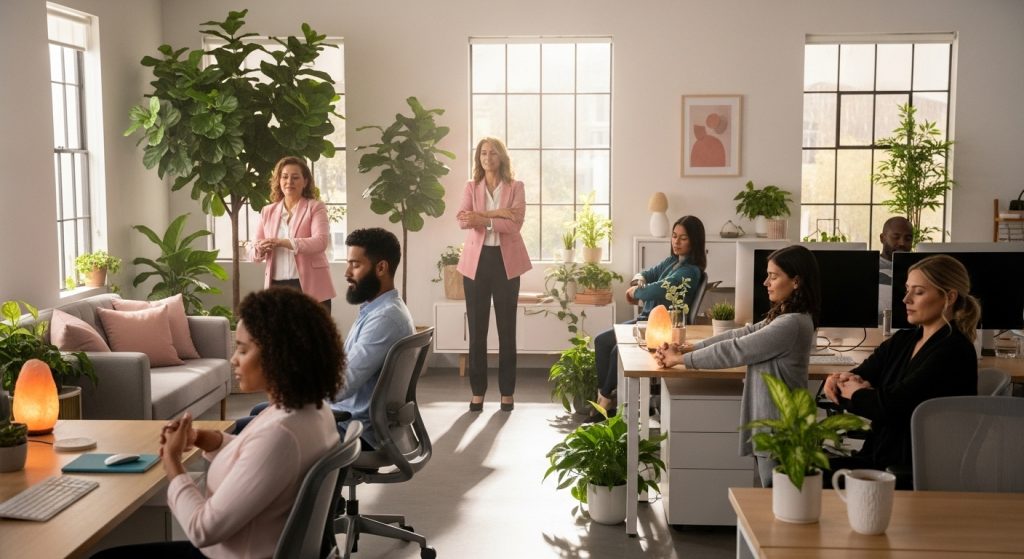
Beyond Pink: The Hidden Cost of Silence
Every October, we wear pink. We post hashtags, share survivor stories, and express solidarity for those affected by breast cancer. It’s a beautiful movement that continues to save lives through awareness and early detection.
Yet, behind the slogans and solidarity, a quieter story unfolds in many workplaces. One where health takes a backseat to hustle. Where employees feel guilty for resting. Where compassion is replaced with “we need it done by Monday.”
The truth is employees don’t leave their health at the office door. Their wellbeing walks in with them every morning. When a workplace neglects that truth, the consequences may not show up on balance sheets immediately, but they will show up in burnout, absenteeism, emotional fatigue, and sometimes, irreversible loss.
The Subtle Ways Work Hurts
Workplace harm doesn’t always come from shouting bosses or outright hostility. Often, it’s embedded in the culture and the unspoken rules that define what’s “normal.”
It’s in:
- The late-night emails that must be answered.
- The meetings that stretch endlessly into personal time.
- The lack of empathy when someone needs a day off for medical care.
These are the quiet killers of workplace wellness. They’re often disguised as “commitment,” “high performance,” or “team spirit.”
But performance that sacrifices people is not sustainable, it’s exploitation dressed in productivity metrics.

Wellness Is Leadership
Caring for employees isn’t weakness. It’s the purest form of leadership. True leaders don’t just see job titles; they see humans, each with a body that needs rest, a mind that needs balance, and a life beyond the office. Employers who prioritize wellness create more than happy staff; they build loyal, creative, and resilient teams.
A healthy organization doesn’t just work better it lives better.
So as we mark Breast Cancer Awareness Month, let’s remember: awareness must translate into action. It’s not just about pink ribbons and campaigns; it’s about creating systems that make it easier for workers to rest, to check, to heal, and to thrive.
SBP Africa’s Stand
At SBP Africa, we’ve seen firsthand that the best organizations are built on care, not control.
As a human resource and people management firm, we help businesses design workplaces where health, dignity, and performance coexist.
Because when companies put people first, progress follows naturally. Productivity rises not because people are pushed but because they feel supported, valued, and seen.
So this October, let’s do more than wear pink.
Let’s build work cultures that protect the very people who keep our companies alive.
Because awareness means nothing if our workplaces remain unsafe for wellness.


Thank you everyone for always reading and leaving your comments🙏
I love every bit of this post! It captures a very neglected converstaion. It always lets give the organisation alive and functioning forgetting the main sources of live “the human resource”. I hope this piece reaches the right audience and organisations.
Thank you SBP
An honest opinion well delivered..Thank you SBP