
Introduction
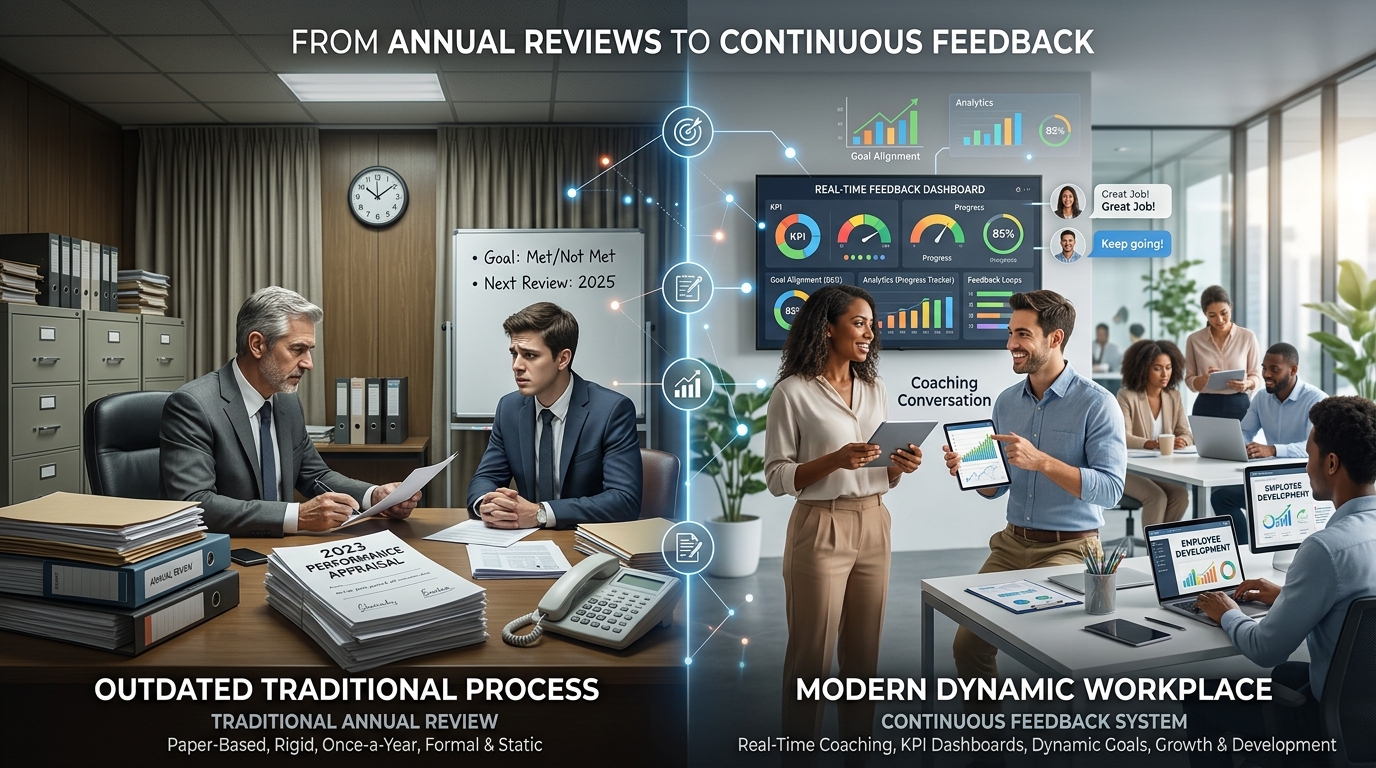
Traditional performance management systems annual reviews, rigid KPIs, and top-down evaluations are becoming obsolete. These conventional methods often fail to capture the fluid nature of modern work environments, where agility, continuous feedback, and real-time alignment are critical to success. Organizations are now recognizing that a once-a-year assessment is no longer sufficient to support employee development or drive meaningful performance outcomes.
In response, there is a growing shift toward more dynamic and continuous performance management approaches that emphasize ongoing conversations, adaptability, and alignment between individual contributions and broader organizational objectives. This modern approach not only fosters greater accountability but also empowers employees to grow, improve, and stay engaged throughout the year.
In this guide, we explore how to build a modern performance management system that drives accountability, growth, and results.
1. Move Beyond Annual Performance Reviews
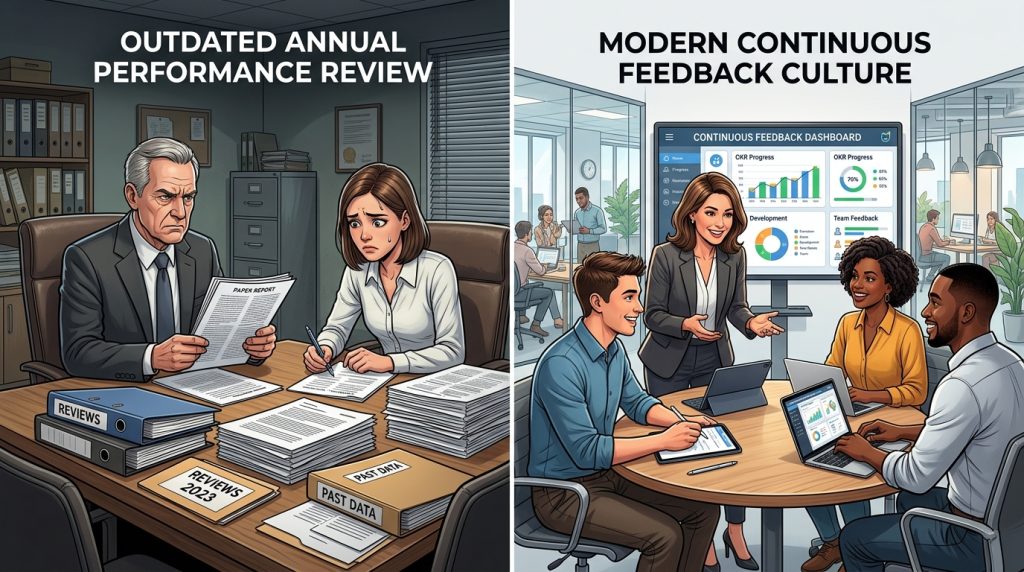
Annual reviews are often outdated by the time they finally take place, making them less effective in capturing an employee’s true performance or addressing real-time challenges. In contrast, continuous feedback has proven to be far more impactful, as it allows for timely course correction, recognition, and ongoing support.
In today’s fast-paced work environment, organizations are encouraged to adopt more frequent performance touchpoints, such as quarterly or even monthly check-ins. These regular interactions create space for meaningful dialogue between managers and employees, ensuring that expectations remain clear and aligned. Additionally, fostering a culture of real-time feedback helps address issues as they arise and reinforces positive behaviors when they matter most.
More importantly, the focus of performance management should shift from criticism to development. By prioritizing growth, skill-building, and constructive guidance, organizations can create an environment where employees feel supported, motivated, and empowered to continuously improve.

2. Set Clear and Measurable Goals
Employees are far more likely to perform at their best when they have a clear understanding of what is expected of them. When goals are well-defined and easy to comprehend, they provide direction, reduce ambiguity, and help employees stay focused and accountable in their roles.
To achieve this, organizations must be intentional about how goals are set and communicated. Clarity and alignment are key not just in defining what needs to be done, but also in ensuring that employees understand how their individual contributions tie into the broader success of the organization.
Some best practices to guide effective goal setting include adopting SMART goals—ensuring that objectives are Specific, Measurable, Achievable, Relevant, and Time-bound. In addition, individual goals should be closely aligned with overall company objectives, creating a sense of purpose and shared direction. Finally, goals should not remain static; regularly reviewing and adjusting targets ensures they stay relevant, realistic, and responsive to changing business needs.

3. Use Data to Drive Decisions
Performance management should be grounded in objectivity rather than personal bias or perception. When evaluations are based on clear data and measurable outcomes, they become more credible, transparent, and fair both for employees and the organization. An objective approach not only builds trust but also ensures that performance discussions are focused on facts, progress, and results rather than opinions.
To support this, organizations should leverage the right tools and metrics to track and assess performance effectively. Productivity tracking systems help monitor output and efficiency over time, while KPI dashboards provide a visual and real-time view of how individuals and teams are performing against set targets. Additionally, employee performance analytics offer deeper insights into trends, strengths, and areas for improvement, enabling more informed decision-making.
By integrating these tools into the performance management process, companies can create a more structured, data-driven system that promotes accountability, consistency, and continuous improvement.

4. Focus on Coaching, Not Just Evaluation
Managers should evolve beyond traditional supervisory roles and embrace the role of coaches guiding, supporting, and empowering employees to reach their full potential. When managers adopt a coaching mindset, performance management becomes less about oversight and more about growth, development, and long-term success.
To effectively implement this approach, organizations must intentionally equip managers with the right capabilities. This includes training them in essential coaching skills such as active listening, asking the right questions, and providing guidance that encourages independent thinking. Equally important is the ability to deliver constructive, timely feedback that is clear, actionable, and focused on improvement rather than fault-finding.
In addition, managers should actively support employee development by identifying skill gaps, recommending learning opportunities, and creating an environment where continuous growth is encouraged. When employees feel supported in their development journey, they are more engaged, confident, and motivated to perform at their best.

5. Link Performance to Rewards and Growth
Employees are more motivated and engaged when they can clearly see the link between their performance and the rewards they receive. When this connection is transparent and consistently applied, it reinforces a culture of meritocracy, encourages accountability, and drives higher levels of productivity across the organization.
To make this effective, organizations must ensure that rewards are directly tied to measurable performance outcomes. This can take several forms, such as promotions that are earned based on demonstrated results and impact, rather than tenure alone. Similarly, bonuses and incentive structures should be aligned with the achievement of specific targets, recognizing both individual and team contributions.
Beyond immediate rewards, providing clear career advancement opportunities is equally important. Employees should understand how strong performance today translates into growth and progression tomorrow. When organizations intentionally link performance to tangible rewards and long-term career paths, they create an environment where employees feel valued, motivated, and committed to continuous improvement.

Conclusion
Effective performance management goes beyond measuring results. It is about enabling success, growth, and alignment between employees and organizational goals. When done right, it creates a culture where people are supported continuously, guided with clarity, and empowered to perform at their best.
At SBP Africa Ltd, we help organizations make this transition. We support businesses in building modern performance management systems that include clear goal-setting frameworks, KPI tracking tools, and manager coaching capability. Our solutions are designed to strengthen accountability, improve performance, and align people with business strategy.
If you are looking to build a high-performing and results-driven workforce, we are ready to help you get there.